Flashing Blades
 1 / 12
Flashing Blades adds hit effects and optional melee-reach changes to ordinary combat in RimWorld 1.
Flashing Blades adds hit effects and optional melee-reach changes to ordinary combat in RimWorld 1.6.
Hit effects start enabled. Swords and spears leave bright attack trails, blunt weapons create swing trails and an impact flash, and unarmed or animal attacks create smaller matching effects.
Melee reach starts disabled. Vanilla melee normally begins at contact range. When enabled, Short, Normal, and Long weapons receive base distances of approximately 1.42, 2, and 3 cells. Colonists, allies, and enemies share these rules.
• Successful sword, spear, blunt, unarmed, claw, and bite attacks receive matching effects.
• Large weapons produce larger trails, and large animals produce larger claw and bite effects.
• Settings control trail size, color, opacity, display chance, and layer count.
• A searchable list controls VFX for individual weapons.
• Experimental reach provides Short, Normal, and Long distances; pawns seek usable attack positions, and players can correct weapon classes.
{What Appears After a Melee Hit}
RimWorld resolves the ordinary melee attack first. After a successful hit, Flashing Blades uses the weapon, action, and damage type to display a matching effect. Damage, hit chance, armor, attack interval, sounds, and combat records retain vanilla rules.
The equipped weapon provides the main visual type, with the current action supplying extra information. An armed pawn using a fist action still displays the weapon's main effect. Unarmed, claw, and bite attacks receive smaller effects. Attacks with limited classification information produce a brief impact flash.
Effect size reflects weapon and animal size. Large swords, spears, and animals create larger matching effects. This changes presentation only.
Settings control trail color, opacity, and one to three trail layers. Blunt hits display one impact flash on the target. Effect chance ranges from 5% to 100%, and Low Intensity Mode halves the selected chance.
The Weapon Exclusion List suppresses effects for selected weapons while their combat values and reach remain unchanged.
{What Experimental Melee Reach Changes}
Enable Extended Melee Reach (Experimental) changes how far a dedicated melee weapon can be from its target when an attack begins. Attacks remain ordinary melee and retain their original actions, hit and dodge checks, armor, attack interval, skill experience, and combat records.
• Short — approximately 1.42 cells. Daggers, knives, and other short blades use vanilla contact distance.
• Normal — 2 cells. Swords, axes, warhammers, maces, and clubs can begin attacking before contact range.
• Long — 3 cells. Spears, pikes, glaives, polearm-like scythes, and staff weapons can begin attacking from farther away.
Distance runs from the attacker's cell to the target's occupied area, including diagonal positions and large targets.
These values define maximum attack distance. A spear remains usable at 3 cells, 2 cells, 1 cell, and contact range. When the target closes the gap, the attacker continues the current melee fight.
When enabled, Short weapon trails become shorter and Long weapon trails become longer to match gameplay distance.
The rule covers every eligible faction. Player Faction Only controls effect visibility; reach applies to colonists, allies, visitors, and enemies.
{How Pawns Choose an Attack Position}
Within weapon distance and a clear route, the pawn stops approaching and attacks. From farther away, the mod searches around the target for a walkable, reachable cell with a direct attack route. It prefers positions near maximum reach, and group attackers try to use different cells.
Doors, corners, narrow passages, buildings, danger, and occupied cells change the choices. Constrained outer positions lead the attacker closer to the next usable cell or contact range.
This feature manages approach and positioning after target selection. Target choice, retreating, and reopening distance continue to come from player orders, RimWorld, or other mods.
{How Weapons Receive a Reach Class}
The system checks manual assignments, built-in rules, then the weapon's name, type, and attack actions. A dedicated melee weapon with limited evidence uses Normal.
Experimental Weapon Reach Classification lets players search by name or source mod and select Automatic, Short, Normal, or Long. Manual choices take priority and control both reach and trail length.
Classification covers primary equipment whose attacks are all melee. Firearms and hybrid weapons retain their original distances even when they include a stock or bash action. Punches, claws, and bites retain vanilla contact distance.
{How Weapon Graphic Size Affects Reach}
Scale Melee Reach by Weapon Graphic Size (Experimental) controls whether a weapon's displayed size further changes gameplay distance. The option starts disabled, so conventional play uses the three base distances.
When active, larger displayed weapons receive farther reach. Four times the reference display size produces about twice the class distance; twice the display size produces about 1.41 times the distance. The lower bound remains approximately 1.42 cells.
This option changes gameplay distance. Larger trails for larger weapons form a separate visual setting with its own switch.
1. Enable Harmony and place it before Flashing Blades in the load order.
2. Open Options — Mod Settings — Flashing Blades. Research.
3. The default setup displays hit effects automatically and retains vanilla melee distance.
4. Enable Extended Melee Reach (Experimental) to apply weapon-class distances to every eligible faction.
5. Review modded weapons through Experimental Weapon Reach Classification. Scale Melee Reach by Weapon Graphic Size controls whether displayed size further affects reach.
Practical result: daggers use contact range, normal swords attack within approximately 2 cells, and spears first seek positions near 3 cells. Enemy spearmen use the same base distance.
The default visual setup retains vanilla damage, hit chance, armor, attack interval, and attack distance. Experimental reach lets Normal and Long weapons attack earlier and lets several melee pawns surround one target from wider spacing. Enemy factions receive the same capability.
Reach classification covers dedicated primary melee weapons. Custom abilities, executions, independent attacks, and systems that control their own movement and hits retain their behavior and can receive dedicated support.
• Game version: RimWorld 1.6.
• Required mod: Harmony, package ID brrainz.harmony.
• Languages: Simplified Chinese and English.
• Saves: safe to add to an existing save; experimental reach activates after the player enables its setting.
• Weapon and race mods: ordinary melee content generally receives effects automatically, and dedicated melee weapons support manual reach classification.
• Compatible with Melee Animation
Moving targets, tight spaces, doors, corners, occupied cells, and movement beyond a planned position can bring Long weapon users close. Pawns prefer outer positions when available.
Pawns search for attack positions within eight cells. Graphic-size adjustment can produce farther reach; the weapon retains its calculated distance while automatic approach searches within that area.
Manual classification corrects unusual modded weapons. Diagnostic Logging writes their class and calculated reach to Player.log.
Created and maintained by Grey·Oviin, with OpenAI assistance. Thanks to everyone who contributed testing and feedback.
Similar Mods


EdB Prepare Carefully
Customize your RimWorld colonists, choose your gear and prepare carefully for your crash landing!
Vanilla Furniture Expanded - Power
This module is a part of Vanilla Furniture Expanded which can be downloaded below.
More Mods by Grey.Oviin

Synth Maiden
Synth Maiden adds a multi-role player mechanoid built on a citizen-grade synthetic body.
Mobile Fortress Compat - UF Heavy Industries
A compatibility patch has been applied to fix the compatibility issues of some specially designed turrets in the UF Heavy Industries MOD, ensuring that they can be successfully captured and utilized by mobile fortresses.
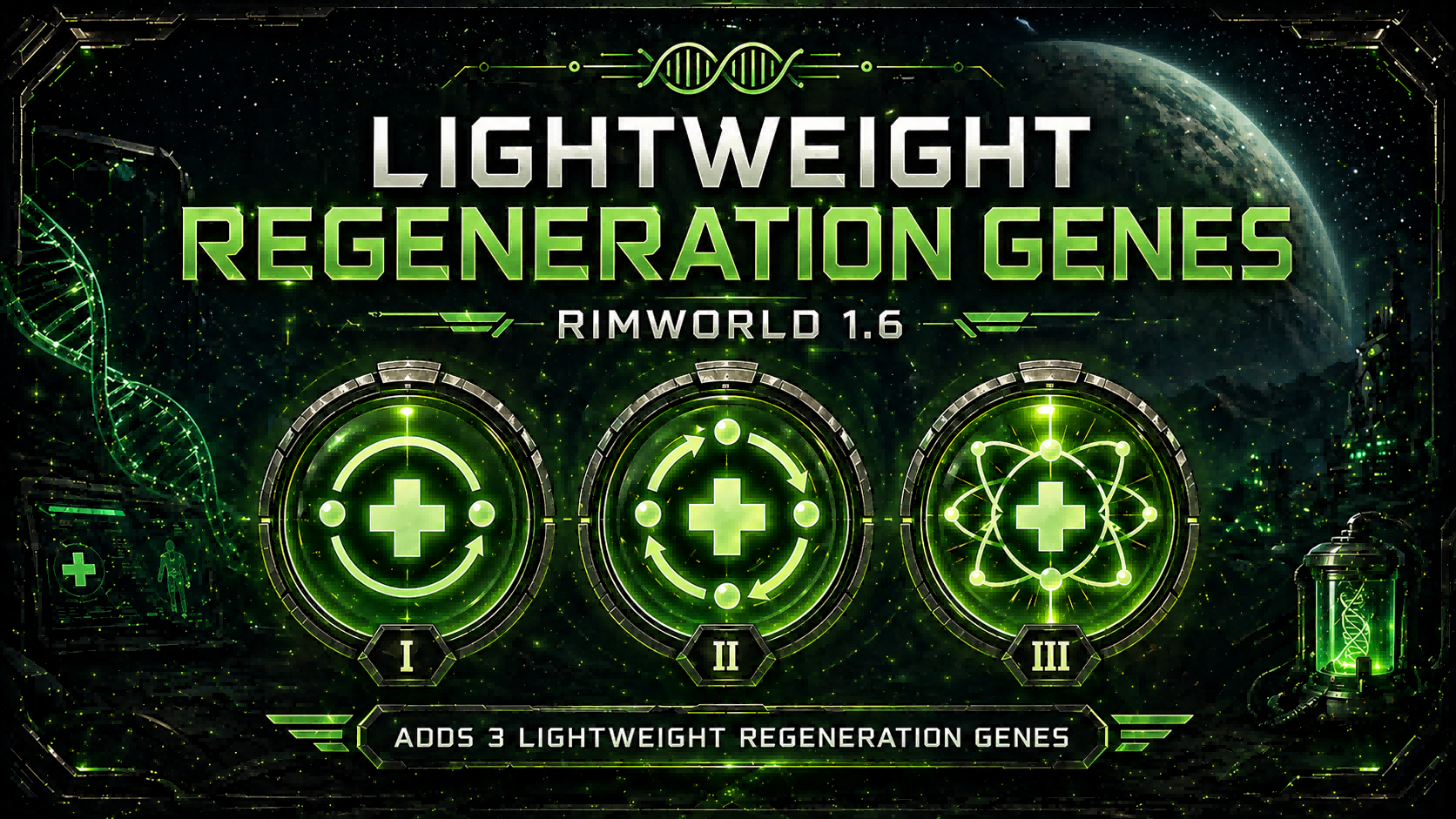
Lightweight Regeneration Genes
Lightweight Regeneration Genes adds three regeneration genes: - Self-Regeneration - Hyper-Regeneration - Extreme Regeneration The difference between them is straightforward: higher-tier genes regenerate faster and cost less per HP restored.
More Management Mods
Character Editor
last update: v1.6.3 build on 2025-07-21 for RimWorld v1.6.4523 Editor for humanlike pawns on map and for crashlanding (colonists, enemies, dead pawns) MOD FEATURES • editor for pawns on map and for crashlanding • editable: body, head, hair, skin color, apparel color, gender, name

Vanilla Events Expanded
See changenotes. Vanilla Events Expanded is one of our oldest mods, and I’m honestly shocked it’s holding up so well - it’s pretty resistant to game updates and bugs because of its simplicity. Back when I first made it with Kikohi, we didn’t know much about modding. I just wanted